It was flattering for me to be asked to participate in a program called the 1776 Project, created by Robert Woodson of the Woodson Center for Community Enterprise here in Washington, DC in reaction to the New York Times’s recent suggestion that 1619 — the date of the arrival of the first enslaved Africans on the shores of what is now the United States — should be considered the date of our national founding. Flattering because several of the names on the list of contributors to 1776 are scholars and writers whose work I respect — Clarence Page, Shelby Steele, John McWorter. Others are folks whose names I don’t know but whose bios suggest serious engagement with the subject at hand. And flattering because Mr. Woodson, in asking me to participate, seemed to have read my mind. I WAS uneasy with the idea of defining our national story as an unending tale of white oppression and black/African American victimization rather than as one of human failure and error, human creativity and aspiration, and a noble, ongoing effort to create a place where all different kinds of people can get along and govern themselves.
Here is the essay I wrote in response to Bob Woodson’s invitation.
Shortly after the publication of my book, You Need a Schoolhouse, Booker T. Washington, Julius Rosenwald and the Building of Schools for the Segregated South, an interviewer asked me, “What was your big take-away from the research you did?” I had never asked myself quite that question but it didn’t take me long to find the answer. Respect for African Americans. The result of my research into the circumstances surrounding the building of schools for African American children in the early decades of the twentieth century was, for me, a newfound respect and admiration for the people who, despite the enslavement of their ancestors and the harsh reality of their present circumstances, did not lose faith with their country in troubled, turbulent, often desperately discouraging times. Like generations of Americans before and after them, they placed great hope for the future in education. In the face of economic uncertainty, frequent violence, and relentless prejudice, they were willing to make sacrifices to ensure that their children had schools to go to. The 4,977 “Rosenwald schools” for African American children built across the South between 1913 and 1932 were the result of a remarkable three way public-private partnership conceived by Booker T. Washington – money provided by public school systems, grants from Julius Rosenwald, the wealthy president of Sears, Roebuck, and contributions from local communities, predominantly from African American men and women who, dollar for dollar, contributed more to the creation of the schools than their wealthy benefactor. By the early 1950s one third of the African American children in the South were being educated in Rosenwald schools.
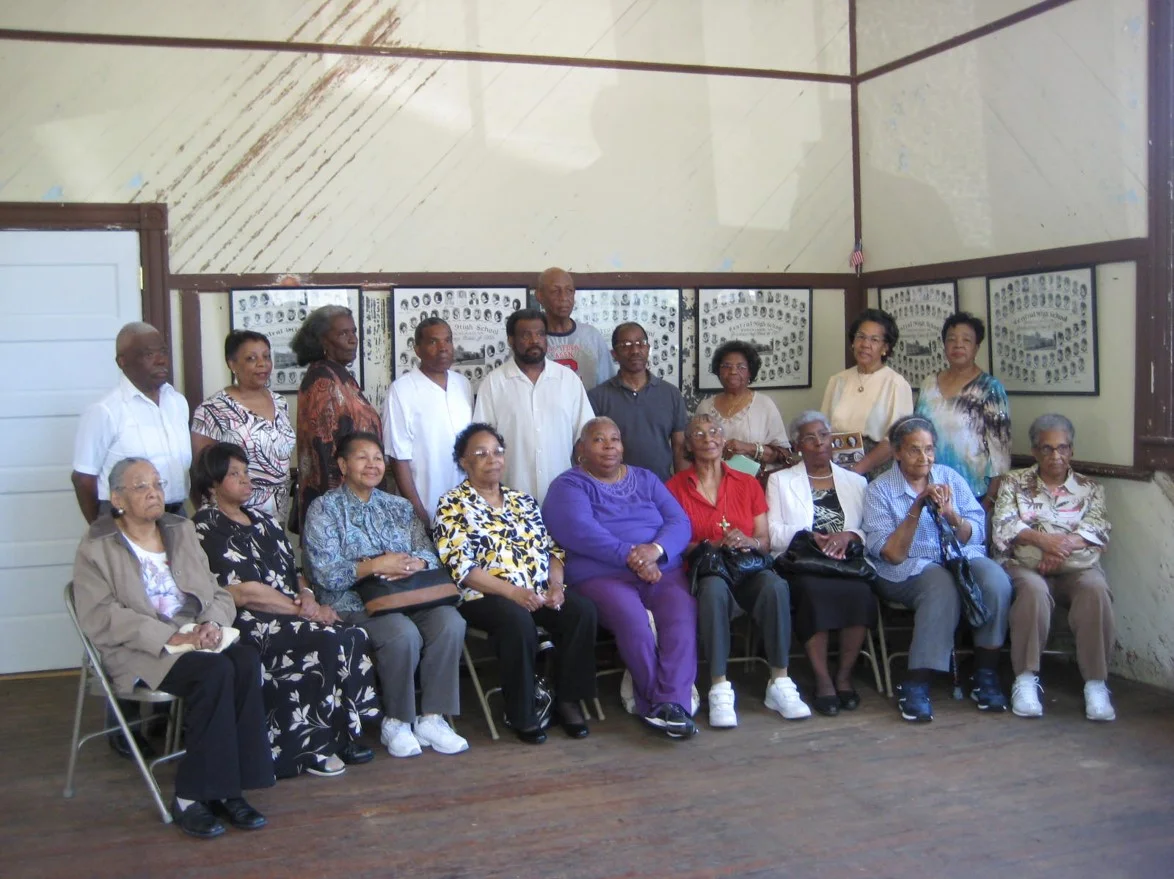
It was serendipity for me that my book came out just as a movement was gaining steam to preserve many of these simple, mostly wooden structures which, once segregation ended, were usually discarded as no longer needed. A very few continued as schools; some passed into private hands and became houses or barns; others were torn down; many were in such remote locations that no one quite knew what happened to them. In 2002 the National Trust for Historic Preservation named the Rosenwald schools to its annual list of most endangered historic sites in the nation. Proud alumni of the schools had begun an effort, ongoing today, to preserve these schoolhouses and, more importantly, the legacy they represent, a legacy I have experienced when meeting scores of men and women who attended the schools. Their pride in the forebears whose vision and generosity provided the schools and in the way they themselves benefited from the education they received there filled me with admiration.
When I began the research for my book I had thought I was well informed. I of course knew something about slavery and the agony of the Civil War. I had lived through the tumultuous days of challenge and change in the late 1950s and 60s. But it turned out there was a significant blank space in my knowledge -- the hundred years between Abraham Lincoln's eloquent call to generosity of spirit and Martin Luther King, Jr’s dream. After the 13th and 14th amendments and Reconstruction came laws restricting rather than expanding opportunity for African Americans – Plessy v. Ferguson enshrining “separate but equal” in law, states rewriting their constitutions to make it more difficult for blacks and others to exercise the right to vote – along with an extra-legal system of social control, lynching. In theory I knew about these things but, in fact, I had not understood what they meant. I had thought of prejudice as a feeling. I had no concept of Jim Crow – prejudice enshrined in an ever-expanding body of law, one imitated by the Nazis in the 1930s as they restricted life for Jews. I thought of lynching as a very occasional horror – not the gruesome deaths of thousands of individuals over a fifty year span, a spectacle sometimes applauded by white mobs that included children. The shame and horror I felt as I learned this history deepened my growing regard for the men and women I was meeting at Rosenwald school events.
I heard from many different people stories about walking to school – sometimes a mile or two or three – and being passed by school buses carrying white children to their schools. Sometimes the white children laughed or made faces at them. Once, on a sparkling fall day in Virginia, I heard about this from a group of Rosenwald alumnae as we walked down a country road, past a house flying a Confederate flag. They told me about their textbooks, cast offs from white schools, used and soiled and sometimes with nasty messages scrawled inside. But I also heard about the devoted teachers who often boarded with local families and offered children steady encouragement with the admonition to “go out and be a credit to your race.” I was told about “soup day” when one parent would bring lunch for everyone, about spelling bees and dances around the Maypole and the annual recitation of the Gettysburg address.
Watching documentary footage of women and men walking to work – which they did for almost a year in Montgomery, Alabama during the bus boycott of 1955 – I realized that many of them or their parents or their aunts and uncles had no doubt been educated in Rosenwald schools. They had learned there not just spelling and counting, but to embrace a sense of citizenship. The portraits of Abraham Lincoln and Booker T. Washington that looked down from the bead board walls around them and the American flags in the corners of their classrooms were part of the lessons they absorbed. In a long-shuttered school in the Northern Neck of Virginia I put my hand in a dusty box and pulled out a civics text book from 1920. I opened it and read, “The purpose of the public school is to prepare students to be good citizens.” Learning about a student walk-out at a North Carolina Rosenwald high school that was to be closed because of integration, I began to understand the loss experienced in the black community as the country lurched from mandated separation to enforced integration. In the face of exclusion and hostility, African Americans had built up magnificent institutions – schools, colleges, businesses, churches, sororities. Not all of these would survive. There would be loss and pain as well as the thrill of progress in the transition to a hoped for more perfect union.
Like the men and women who contributed to building Rosenwald schools, I believe in the power of education. To understand the present it is crucial to know what has gone before, not just in order to right the wrongs but to build on the strengths. My own understanding of the present has been immeasurably enriched by deepening my appreciation for what has gone before. Our present is the result of a painful evolution from our founding, with its tacit acceptance of the fact that the newly established United States was being built on an impossible contradiction – the assertion that “all men are created equal” while one portion of the population enslaved another – through the gruesome physical fight to end slavery and then the struggle to more closely align reality to our majestic national principles. This road has certainly been stony. Every American needs to know that and feel something of that pain. But the evolution has also been guided by faith in the rule of law, by respect for our founding principles, by optimism, and by powerful voices of reason.
Among those, no voice was more eloquent than that of Frederick Douglass. In his brilliant new biography, historian David Blight charts Douglass’s growth over a long career from an abolitionist fueled by fury and outrage to one whose confidence in the future was built on knowledge of and love for, among other things, the Declaration of Independence. “The forces against us,” Douglass said in one of his many speeches, “are passion and prejudice, which are transient, and those for us are principles, self-acting, self-sustaining and permanent.”
The principle that all people are created equal, and the notion that they are endowed by their creator with the “unalienable” rights to life, liberty and the pursuit of happiness could not possibly mean more to anyone than to those who, like Douglass, had experienced the hideous indignities of slavery. All Americans owe a debt of gratitude, not just to the founders who, in 1776, so powerfully articulated these magnificent principles, but also to the generations since who have never lost faith in them.
I, and others, are sure to have a great deal to say about this in the days and months and years ahead. Most of us will wrestle with these issues much as we wrestle with our own fallibilites and strengths. Where we find the bottom line — in shame and horror or in optimism, humility and pride — will differ. But I would hate to see my grandchildren taught that the story of our nation begins in slavery and ends in intransigent racism and inequality. Because I don’t believe that. I really don’t.